
Why Is Some Pigmentation Harder to Treat Than Others?

Dr Cheong Wai Kwong
Senior Consultant Dermatologist
MBBS (Singapore), MRCP (UK), FRCP (Edinburgh), FAMS (Dermatology)
Dark patches of pigmentation can be frustrating to manage, particularly when different areas of your skin respond inconsistently to treatment. Some unwanted patches may gradually become less noticeable, while others persist despite treatment or recur after temporarily improving.
These unpredictable outcomes can make it difficult to know what to expect from treatment or whether a different approach is needed. Understanding why certain pigmentation is more persistent can help explain these variations, set realistic expectations and guide decisions about further treatment or longer-term management.
What Makes Pigmentation Respond Differently to Treatment?
Several factors can affect how readily pigmentation responds once treatment begins. Some influence how easily the pigment can be targeted, while others affect whether improvement can be maintained without triggering further darkening.
Pigment Depth
Pigment concentrated mainly in the epidermis, the upper layer of the skin, is generally more accessible to treatments that act closer to the surface. When pigment extends into the deeper dermis, improvement can be slower because the target is less readily reached.
Some pigmentation also has both superficial and deeper components. The more accessible portion may fade first, while deeper discolouration remains visible, making the overall response appear incomplete.
Where the pigment sits can therefore influence both the expected pace of improvement and the type of treatment that is likely to be useful.
Ongoing Pigmentation Triggers
Certain pigmentation conditions can remain active even as existing discolouration begins to fade because the skin may still be exposed to factors that encourage further pigment production. For example, ultraviolet exposure can continue to stimulate pigmentation in susceptible skin, while ongoing inflammation may leave further darkening as the skin heals.
This can make improvement less straightforward, as treatment is addressing existing pigmentation while the underlying trigger may still be contributing to new discolouration. Managing these triggers can therefore be as important as lightening the pigment that has already formed.
Risk of Treatment-Related Irritation
There is also a limit to how aggressively pigment can be treated without affecting the surrounding skin.
Topical treatments and procedures can cause irritation or inflammation, particularly when used too intensively. In skin that is prone to developing pigmentation after inflammation, this response can leave additional darkening and work against the intended improvement.
The aim of pigmentation treatment is therefore not to create the strongest possible reaction, but to have enough effect on the pigment while avoiding unnecessary inflammation that could prolong the problem.
Why Can Some Pigmentation Conditions Remain Persistent?
Not every pigmentation condition follows a simple pattern of appearing, being treated and then fading. Some remain biologically active or behave differently as treatment progresses, which can make improvement less predictable.
Melasma and Recurrence
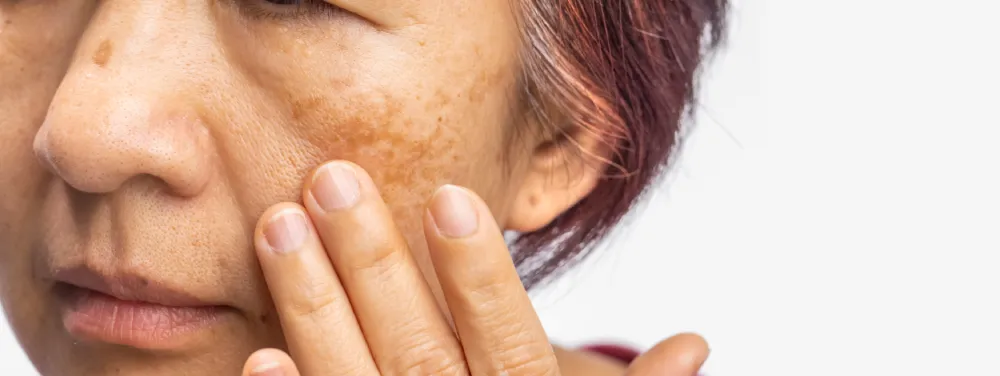
Melasma is particularly prone to recurrence because factors that stimulate excess pigment production can continue to affect the skin after treatment. As a result, patches may become lighter with treatment but gradually darken again, particularly when triggers such as sun exposure and hormonal changes remain relevant.
Recurrence therefore does not always mean an earlier treatment was ineffective. Longer-term control may remain important even after the pigmentation has improved.
Lingering Post-Inflammatory Hyperpigmentation
Post-inflammatory hyperpigmentation, or PIH, is darkening that develops after the skin has been inflamed or injured.
By the time the pigmentation becomes noticeable as a separate concern, the inflammation that caused it may already have settled. The colour change can remain after redness or other signs of inflammation have improved, so recovery from the original skin problem does not necessarily mean the pigmentation will disappear at the same pace.
When inflammation continues to recur, fresh marks can appear before earlier ones have faded. In these cases, managing the underlying skin problem may need to happen alongside treatment of the pigmentation already present.
How Do Dermatologists Adapt Pigmentation Treatment?
Dermatologists adapt pigmentation treatment by identifying the underlying condition, monitoring how the skin responds and adjusting the treatment plan according to the progress observed.
Different pigmentation disorders can resemble one another, and more than one type may be present in the same area. Dermatological assessment helps distinguish between these possibilities and guides the initial choice of treatment.
The plan can then be refined according to what happens over time. Steady improvement may support continuing the same approach, while little change may prompt a different treatment method or schedule. If irritation or further darkening develops, treatment may instead need to be reduced or spaced further apart.
Ongoing assessment helps ensure that treatment remains appropriate as the pigmentation responds, particularly when progress is slower than expected or the skin develops unwanted reactions.
Understanding Persistent Pigmentation With Dr Cheong Wai Kwong
If pigmentation has remained despite previous treatment, or constantly returns, a thorough dermatological assessment can help identify the factors contributing to these difficulties and determine whether changes to treatment or longer-term management are needed.
At Specialist Skin Clinic, patients can receive specialist assessment and personalised treatment for a range of pigmentation concerns. Senior Consultant Dermatologist Dr Cheong Wai Kwong can evaluate the type and distribution of pigmentation, identify potential triggers and assess previous treatment responses before recommending a suitable approach. Where appropriate, this may include laser or IPL treatments, with ongoing reviews to monitor improvement, manage skin reactions and adjust treatment as needed.
Contact Specialist Skin Clinic to arrange a consultation with Dr Cheong and explore suitable options for managing persistent pigmentation.
Related Media Features
FAQs About Difficult-to-Treat Pigmentation
Does skin tone affect how difficult pigmentation is to treat?
Skin tone can influence how cautiously certain pigmentation treatments need to be used. In darker skin tones, inflammation may be more likely to leave noticeable post-inflammatory hyperpigmentation, so avoiding unnecessary irritation becomes particularly important. This does not mean pigmentation cannot respond well to treatment, but it can affect treatment selection and pacing.
Does the location of pigmentation affect how it is treated?
It can. Pigmentation on different parts of the face or body may need to be approached differently because the skin and its exposure to factors such as sunlight or friction can vary by location. A dermatologist can take the affected area into account when deciding how treatment should be approached.
Can having more than one type of pigmentation make treatment more difficult?
Yes. Different forms of pigmentation may respond differently even when they appear within the same area. When more than one process is contributing to the discolouration, a single treatment approach may not address every component equally, so treatment may need to be adjusted according to what remains.

| Main Line | : (65) 6734 1411 |
| Fax | : (65) 6235 5900 |
| Mon - Fri | : 8:30am - 5:00pm |
| Sat | : 8:00am - 1:00pm |
| Closed on Sundays and Public Holidays | |