
Common Skin Pigmentation Disorders That Specialists Can Treat

Dr Cheong Wai Kwong
Senior Consultant Dermatologist
MBBS (Singapore), MRCP (UK), FRCP (Edinburgh), FAMS (Dermatology)
Skin pigmentation disorders can affect both appearance and self-confidence, especially when discolouration becomes more noticeable or difficult to manage with over-the-counter products alone. These conditions could develop for different reasons, including sun exposure, hormonal changes, inflammation and autoimmune activity.
Dermatologists are trained to diagnose the underlying cause of pigmentation changes and recommend treatments based on the specific condition, skin type and severity involved. Depending on the diagnosis, treatment may include a variety of long-term skin management strategies aimed at reducing pigmentation and preventing the worsening of symptoms.
How Can a Dermatologist Help with Pigmentation Disorders?
Skin pigmentation disorders can develop for many different reasons, and not all forms of pigmentation respond to the same treatment approach. In some cases, patients may even have multiple pigmentation conditions occurring at the same time. Dermatologists play an important role in identifying the underlying cause of pigmentation changes and recommending treatments that are appropriate for the specific condition and skin type involved.
Dermatologists provide:
- Accurate diagnosis of pigmentation conditions: Different pigmentation disorders can appear similar but require different treatment approaches. Dermatologists are trained to identify the specific type of pigmentation involved, helping treatments target the underlying cause more effectively.
- Assessment of skin type and treatment suitability: Treatments such as prescription creams, chemical peels and laser procedures may not be suitable for every skin type. Dermatologists assess factors such as skin sensitivity, pigmentation depth and risk of irritation before recommending treatment.
- A holistic and long-term management approach: Pigmentation can be influenced by sun exposure, hormonal changes, inflammation, medications and skincare habits. Dermatologists can evaluate these contributing factors and advise on long-term skincare and maintenance strategies to help reduce recurrence and support treatment outcomes.
Using these methods, a pigmentation specialist may be able to resolve some of these common conditions that could be affecting your complexion:
Melasma
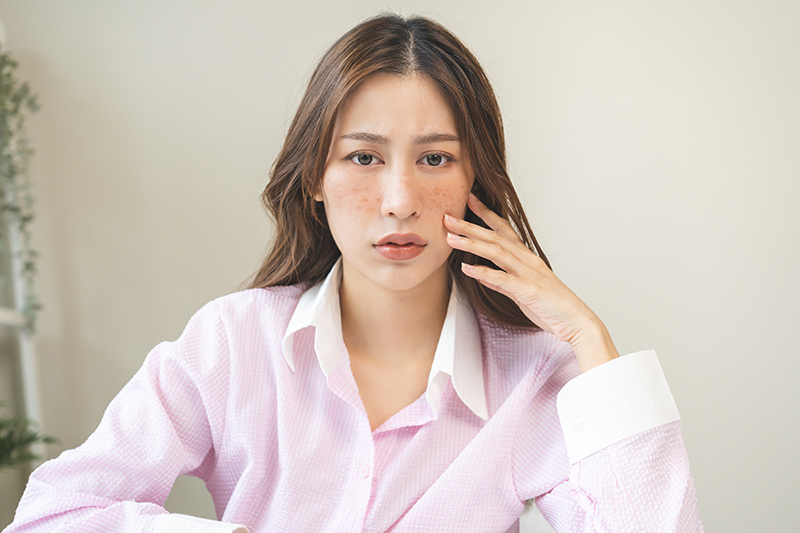
Melasma is a common skin pigmentation disorder that causes brown or grey-brown patches to develop on areas frequently exposed to the sun, such as the cheeks, forehead, nose and upper lip. It is more commonly seen in women and is often associated with hormonal changes, sun exposure and genetic predisposition. The condition can become more noticeable over time without proper management, particularly in individuals with repeated UV exposure.
How Do Dermatologists Treat Melasma?
Dermatologists may treat melasma using a combination of:
- Prescription creams
- Chemical peels
- Laser or light-based therapies
Treatment plans are usually tailored according to the depth of pigmentation, skin type and severity of the condition. In many cases, multiple sessions and long-term maintenance may be required to achieve gradual improvement while minimising irritation or recurrence.
How Can Melasma Recurrence Be Managed?
Dermatologists often recommend daily broad-spectrum sunscreen, protective skincare and maintenance treatments to help reduce the risk of pigmentation returning. Patients may also be advised to avoid excessive heat and UV exposure, which can worsen the condition.
Post-Inflammatory Hyperpigmentation (PIH)
Post-inflammatory hyperpigmentation (PIH) occurs when areas of the skin become darker following inflammation or injury. It commonly develops after acne, eczema, insect bites, burns or cosmetic procedures, particularly in individuals with darker skin tones. The pigmentation results from excess melanin production triggered during the skin's healing process.
How Do Dermatologists Treat Post-Inflammatory Hyperpigmentation?
Treatment for PIH focuses on reducing excess pigmentation while addressing the underlying skin condition that triggered it. Depending on the severity and depth of the pigment, dermatologists may gradually introduce:
- Topical medications
- Chemical peels
- Laser treatments
- Gentle exfoliating agents
How Can Future PIH Flare-Ups Be Reduced?
Reducing future PIH flare-ups often involves controlling inflammatory skin conditions early and minimising skin trauma. Dermatologists may advise patients to avoid picking acne lesions, harsh skincare products or aggressive exfoliation that can irritate the skin.
Consistent sun protection is also important, as UV exposure can darken existing pigmentation and prolong recovery.
Sunspots and Age Spots
Unlike melasma, which often appears as larger patches of pigmentation linked to hormonal and genetic factors, sunspots and age spots are usually smaller, more defined dark spots caused primarily by cumulative sun exposure over time. These spots commonly develop in areas that receive frequent UV exposure, such as the face, hands, shoulders and arms, and tend to become more noticeable with age.
How Do Dermatologists Treat Sunspots and Age Spots?
Dermatologists may treat sunspots and age spots using:
- Topical lightening agents
- Chemical peels
- Cryotherapy
- Laser treatments
Because these spots are usually more localised and superficial compared to melasma, some patients may respond well to targeted procedures with visible improvement after several sessions.
How Can You Prevent Further Sunspots and Age Spots?
Preventing further sunspots and age spots mainly involves minimising cumulative UV damage. Dermatologists often recommend daily sunscreen use, protective clothing and avoiding prolonged sun exposure, especially during peak daylight hours. Consistent sun protection can also help prevent existing pigmentation from darkening further over time.
Vitiligo
Vitiligo is a chronic skin condition that causes patches of skin to lose pigment due to a loss of melanocytes, the cells responsible for producing skin pigments. The condition may affect any part of the body and can gradually spread over time. Vitiligo is believed to be linked to autoimmune factors and may vary significantly in severity between individuals.
How Do Dermatologists Treat Vitiligo?
Treatment for vitiligo focuses on restoring pigment where possible and slowing the progression of depigmentation. Dermatologists may recommend:
- Topical medications
- Phototherapy
- Surgical procedures
How Is Vitiligo Managed Long-Term?
Unlike some other pigmentation conditions, vitiligo is a chronic disorder that may not always be permanently reversed. Long-term management focuses on slowing progression, maintaining skin stability and supporting pigment restoration where possible.
When to See a Skin Specialist for Pigmentation Disorders
It may be advisable to see a dermatologist if skin pigmentation changes are:
- Becoming persistent and spreading progressively
- Not improving with over-the-counter care
- Affecting your confidence
- Causing uncertainty about possible underlying conditions
- Accompanied by other skin symptoms such as irritation or inflammation
A dermatologist can evaluate the type and cause of pigmentation involved and recommend treatment options tailored to the individual's skin type and condition severity. Early assessment may also help reduce the risk of worsening pigmentation or resorting to inappropriate self-treatment that could aggravate the condition.
Seeking Care for Your Condition at a Skin Pigmentation Clinic
Many skin pigmentation disorders can vary significantly in their causes, appearance and response to treatment. Many may require a more targeted and long-term management approach under the care of a dermatologist in order to be reliably resolved. An accurate diagnosis can make a difference in ensuring that your condition is treated in an accurate and effective manner.
If you are experiencing persistent or worsening pigmentation concerns, consulting a dermatologist may help clarify the underlying cause and identify suitable treatment options for your skin type and condition. Specialist Skin Clinic offers treatment for pigmentation disorders and a wide range of dermatological conditions, under the care of Dr Cheong Wai Kwong, our senior consultant dermatologist. Dr Cheong aims to provide individualised management plans that resolve problems at the root, resulting in a unique approach for each patient.
If you would like to better understand the cause of your pigmentation concerns or explore suitable treatment options, contact us today to book an appointment.

| Main Line | : (65) 6734 1411 |
| Fax | : (65) 6235 5900 |
| Mon - Fri | : 8:30am - 5:00pm |
| Sat | : 8:00am - 1:00pm |
| Closed on Sundays and Public Holidays | |