
How to Choose the Right Acne Scar Treatment for Your Scar Type

Dr Cheong Wai Kwong
Senior Consultant Dermatologist
MBBS (Singapore), MRCP (UK), FRCP (Edinburgh), FAMS (Dermatology)
Acne scars can remain long after active breakouts have resolved, affecting both skin texture and confidence. However, not all acne scars are the same. Some appear as depressions in the skin, while others appear as raised bumps. Because these marks develop through different healing processes, they do not all respond to the same treatments.
Choosing the right acne scar treatment begins with identifying your acne scar type. Dermatologists can assess the characteristics of your scars, your skin type and your individual concerns before recommending a personalised treatment plan. Understanding the differences between common acne scar types and the treatments best suited to each can help you make more informed decisions and set realistic expectations for treatment outcomes.
Understanding the Different Types of Acne Scars
Acne damages the skin's tissue and the top layer of the skin. This causes the skin to try to repair itself by producing collagen, which helps to replace the tissue that has been damaged. However, too much or too little collagen production can lead to acne scarring.
With inadequate collagen, the skin will not develop enough tissue to repair the damage, leading to skin depressions called atrophic scars. On the other hand, excessive collagen production may lead to raised scars, also known as hypertrophic scars.
Atrophic Scars
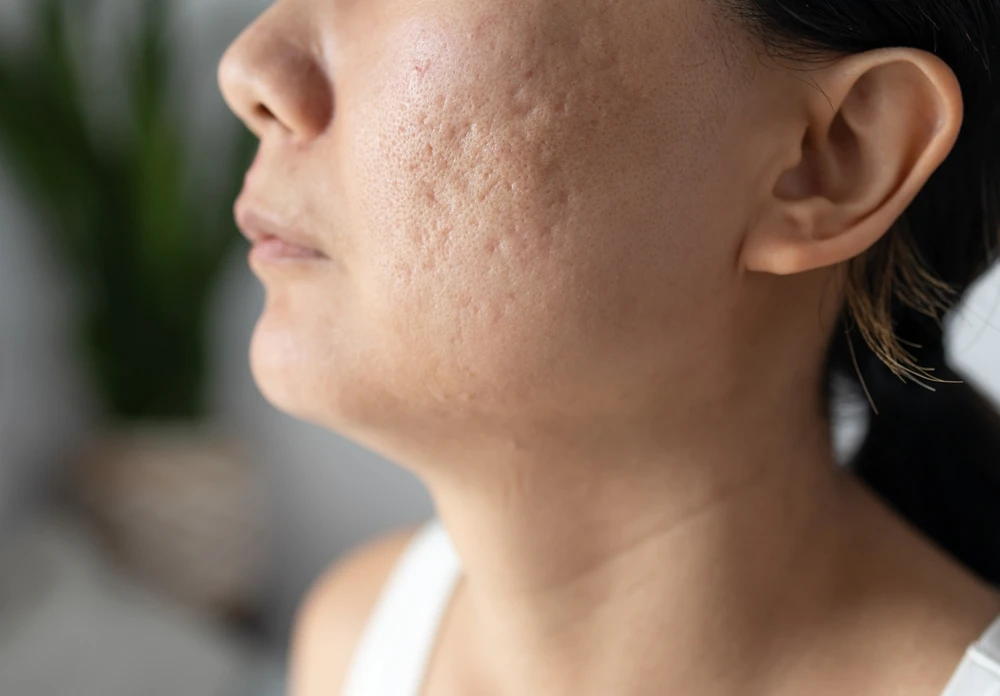
Atrophic acne scars are the most common type of acne scars. They are a result of insufficient collagen during the acne healing process, manifesting as indentations on the surface of the skin.
Atrophic scars are commonly classified into three subtypes:
- Ice Pick Scars: Deep, narrow scars that extend into the skin.
- Boxcar Scars: Wider, sharply defined depressions with distinct steep, sharp, vertical edges.
- Rolling Scars: Broad, shallow depressions that create an uneven or wavy skin texture. Unlike boxcar scars, they have smooth, sloping edges.
Hypertrophic and Keloid Scars
Hypertrophic and keloid acne scars form due to an oversupply of collagen during the acne healing process, resulting in raised lesions on the surface of the skin. Hypertrophic scars remain within the boundaries of the original acne lesion, while keloid scars extend beyond the affected area into surrounding skin. These scars are more commonly found on the chest, shoulders, back and jawline, and may be associated with itching, tenderness or discomfort.
Hyperpigmentation
These are dark spots or patches on the surface of the skin that result from excess melanin production. Post-inflammatory hyperpigmentation (PIH) refers to the dark brown, grey or black marks that can remain after acne heals. Unlike true acne scars, these marks are caused by increased melanin production rather than permanent changes to the skin's structure. They often fade gradually over time, although the process may take several months depending on skin tone, sun exposure and the severity of the original inflammation.
Which Treatments Are Best Suited for Each Scar Type?
Treatment depends on whether the scars are depressed or raised, as well as their depth, severity and location. Some procedures stimulate collagen remodelling, while others elevate, remove or flatten scar tissue.
Beyond the scar type, the most appropriate treatment depends on its severity, the location of the scar, and your treatment goals. During a consultation, your doctor will assess your skin to identify whether treatment is suitable.
Treatments for Atrophic Scars
Atrophic scars are often treated with procedures that stimulate collagen production or improve the skin's surface by raising depressed areas or lowering the surrounding skin.
Dermal Filler Injections
Dermal filler injections can be placed beneath certain depressed acne scars to lift the skin and create a smoother, more even appearance. How long the results last depends on the type of filler. This approach is generally better suited to rolling scars and selected boxcar scars.
Laser Resurfacing
Fractional laser treatment creates controlled microscopic treatment zones that stimulate collagen remodelling. It may improve selected boxcar, rolling and shallower ice pick scars over a series of sessions.
Dermabrasion and Microdermabrasion
Dermabrasion is a more intensive resurfacing procedure that removes deeper layers of skin, while microdermabrasion provides superficial exfoliation. Microdermabrasion may improve mild surface unevenness but is not expected to correct deep atrophic scars.
Subcision
Subcision is particularly effective for rolling scars. A fine needle is inserted beneath the skin to release the fibrous bands that pull the scar downward, allowing the skin to lift and creating a smoother appearance.
Punch Excision
Punch excision is a technique used on deep depressed and ice pick scars when resurfacing and peel methods are not enough. Under local anaesthesia, the scar tissue is surgically removed and closed with sutures or adhesives.
Treatments for Hypertrophic and Keloid Scars
Raised scars require treatments that reduce excess scar tissue rather than stimulate additional collagen production.
Silicone Therapy
Silicone gels or sheets may help soften raised scars and reduce their thickness when used consistently over several months. A dermatologist can advise how long they should be used and whether additional treatment is needed.
Steroid Injections
Intralesional corticosteroid injections help flatten hypertrophic and keloid scars by reducing inflammation and slowing excessive collagen production. Multiple treatment sessions are often required.
How Dermatologists Personalise Acne Scar Treatment Plans
No two patients have identical acne scars, which is why treatment planning is based on an individual assessment rather than a one-size-fits-all approach. Dermatologists evaluate the characteristics of your scars, your skin type, the presence of active acne and your treatment goals before recommending the most appropriate options. In many cases, combining different treatments provides better results than relying on a single procedure.
Scar Type and Severity
The first step is identifying the type of acne scars present, as different scars respond to different treatments. Many patients have a combination of atrophic scars, raised scars and post-inflammatory hyperpigmentation, requiring a tailored approach that addresses each concern. The depth, size and distribution of the scars also influence which procedures are likely to be most effective.
Skin Type and Risk of Pigment Changes
Your skin tone plays an important role in treatment selection. Individuals with darker skin types may have a higher risk of developing post-inflammatory hyperpigmentation after certain procedures, so dermatologists may recommend treatments with a lower risk profile or adjust treatment settings to minimise potential side effects.
Presence of Active Acne
If active acne is still present, it is usually managed before or alongside scar treatment. Continuing breakouts can lead to new scars, making it difficult to achieve lasting improvements if scar treatment begins too early.
Downtime and Treatment Goals
Different procedures involve varying amounts of recovery time and produce results at different rates. Some patients prefer treatments with minimal downtime that can be performed gradually, while others may be suitable for more intensive procedures with longer recovery periods. Your dermatologist will discuss the expected benefits, recovery process and number of treatment sessions required to develop a plan that aligns with your lifestyle and expectations.
Acne Scar Assessment and Treatment With Dr Cheong Wai Kwong
With so many types of acne scar treatments available, it may not always be obvious where to begin. A dermatologist can assess your scar type, skin characteristics and treatment goals, then explain the available options and what you can realistically expect from them.
At Specialist Skin Clinic, Senior Consultant Dermatologist Dr Cheong Wai Kwong draws on his experience in acne scar management to recommend suitable procedures, monitor progress and adjust treatment approaches. Dr Cheong aims to improve the appearance of scarring through carefully monitored treatment strategies and consistent support, while taking recovery needs and potential side effects into account.
If you are struggling with acne scarring concerns, contact us today to book an appointment and discuss a personalised treatment plan with Dr Cheong.
FAQs About Choosing the Right Acne Scar Treatment
Will I need more than one type of acne scar treatment?
Many people have a combination of scar types that respond differently to treatment. A dermatologist may recommend combining or sequencing procedures such as laser resurfacing and subcision to address different scar structures. You may also need several sessions depending on the severity of the scarring and the procedures used.
How long does it take to see improvement after acne scar treatment?
Results vary depending on the treatment performed and the severity of your scars. Some treatments produce gradual improvements over several months as new collagen forms, while others may require a series of sessions before noticeable changes become apparent. Your dermatologist can provide a realistic timeline based on your treatment plan.
Is there a best age to start acne scar treatment?
There is no strict age for starting acne scar treatment. Timing depends more on whether your acne is still actively causing new scars. Acne may settle after adolescence, but it can also continue into adulthood, so a dermatologist will usually consider how stable your breakouts are rather than making an assessment based on age.
Can acne scar treatment be performed if I still have active acne?
In many cases, active acne should be brought under control before focusing on scar treatment. Continuing breakouts can create new scars and affect treatment outcomes. Your dermatologist may recommend treating active acne first or managing both conditions together when appropriate.
Are acne scar treatments permanent?
Some improvements may be long-lasting, while others, such as those produced by dermal fillers, are temporary. No treatment can completely erase acne scars, and further breakouts can cause new scars. Your dermatologist can explain how long the expected results of a recommended procedure may last.

| Main Line | : (65) 6734 1411 |
| Fax | : (65) 6235 5900 |
| Mon - Fri | : 8:30am - 5:00pm |
| Sat | : 8:00am - 1:00pm |
| Closed on Sundays and Public Holidays | |