
How Does Adult-Onset Eczema Differ From Childhood Eczema?

Dr Cheong Wai Kwong
Senior Consultant Dermatologist
MBBS (Singapore), MRCP (UK), FRCP (Edinburgh), FAMS (Dermatology)
Adult-onset eczema can differ from childhood eczema in the areas affected, likely triggers and conditions that need to be ruled out. However, it is not necessarily a separate disease. Both can involve skin-barrier dysfunction, inflammation, itching and recurring flare-ups.
When an eczema-like rash appears for the first time in adulthood, a dermatologist may need to distinguish adult-onset atopic dermatitis from contact dermatitis or another condition with similar symptoms. This distinction matters because the underlying cause can affect which triggers should be avoided and which treatment approach is appropriate.
Key Takeaways
- Adult-onset eczema can develop even without a history of childhood eczema.
- Adult eczema often affects the hands, face, neck and eyelids more frequently than childhood eczema.
- Genetic factors, chronic stress, hormonal changes and ageing skin may contribute to adult-onset eczema.
- Persistent, worsening or frequently recurring eczema should be assessed by a dermatologist.
How Do Adult and Childhood Eczema Differ?
Adult and childhood eczema tend to differ in the areas affected, how the skin changes over time and the exposures that trigger flare-ups. Repeated flares in adults may also leave the skin drier, thicker or more deeply cracked.
Course and Persistence
Childhood eczema often changes as the child grows. Symptoms may become milder, continue into adulthood or return after a period of clearer skin.
Adult-onset eczema may appear as occasional flares affecting one area, such as the hands or eyelids, or as a more persistent condition involving several areas. How often it returns can be influenced by skin dryness, repeated irritation and continued exposure to personal or workplace triggers.
Commonly Affected Areas
In infants, eczema often affects the cheeks, scalp and outer surfaces of the arms and legs. As children grow older, it commonly appears inside the elbows, behind the knees and around the wrists or ankles.
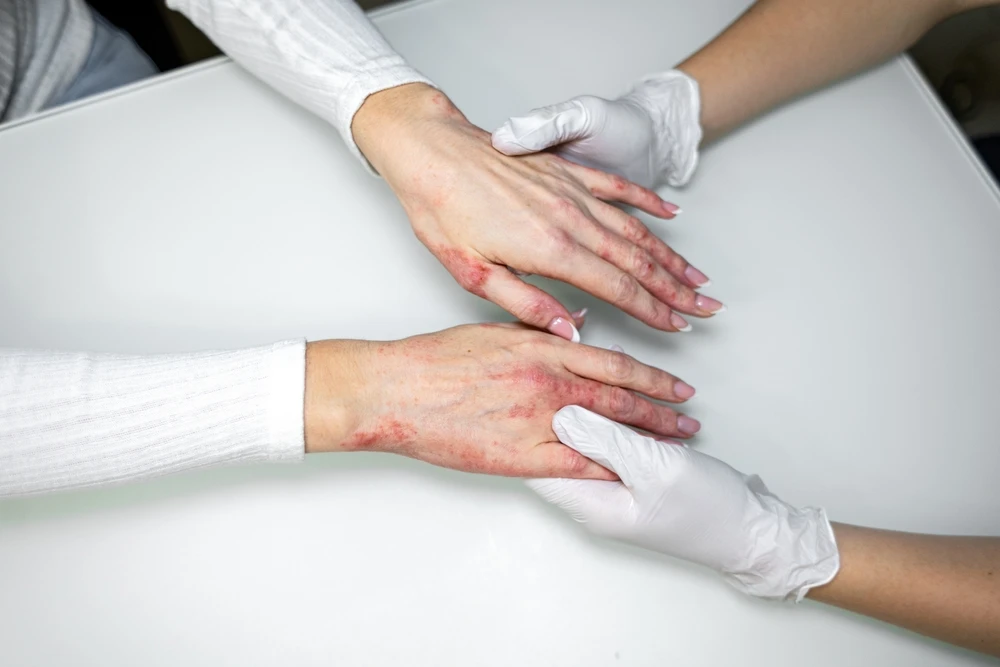
Adults frequently develop eczema on the hands, face, neck and skin around the eyes. Hand eczema is particularly common among people whose work or daily routine involves frequent handwashing, prolonged contact with water, cleaning products or protective gloves.
Differences in Skin Appearance
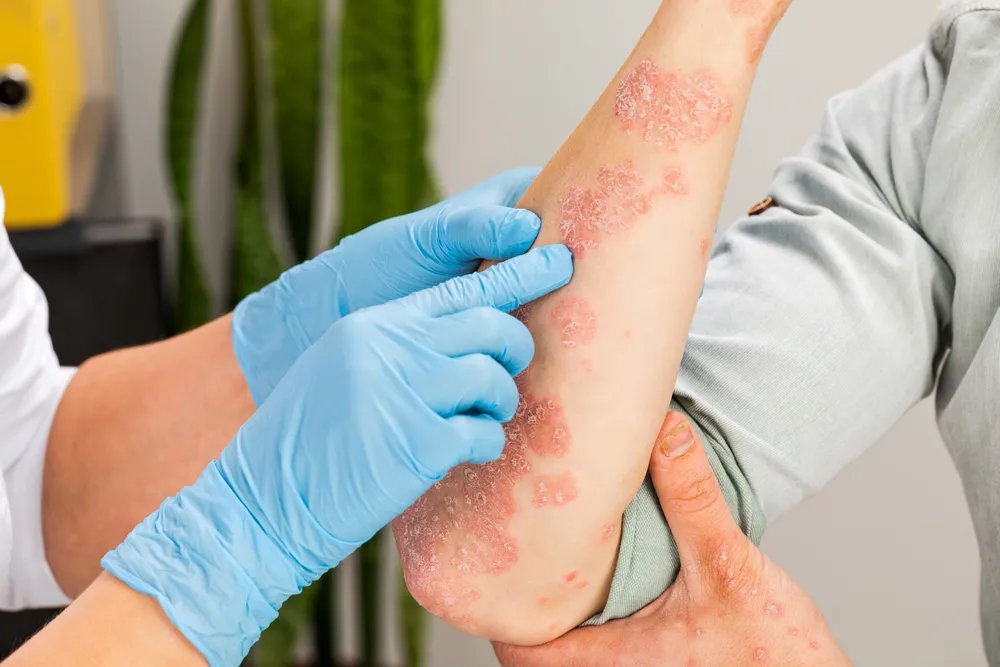
During an active flare, eczema can cause inflamed, intensely itchy skin that blisters, oozes or forms crusts. In adults, recurring eczema is often particularly dry and scaly. Repeated rubbing and scratching may leave affected areas rough, thickened or darker than the surrounding skin, while hand or foot eczema may produce painful cracks.
Triggers and Adult Exposures
Dry skin, heat, perspiration, infections, allergens, irritating personal-care products and emotional stress can trigger eczema at any age.
Adults may also have repeated contact with detergents, disinfectants, chemicals, solvents, gloves or water through work and household activities. These exposures can aggravate atopic eczema or cause contact dermatitis that resembles it.
Why Does Eczema Develop Later in Life?
Eczema develops when a combination of genetic susceptibility, immune responses and environmental factors disrupts the skin's protective barrier, allowing inflammation to occur. In many cases, there is no single cause as to why it develops in an adult.
Genetic Predisposition
Some adults have an inherited tendency to develop eczema but do not experience symptoms until later in life. Although the underlying genetic susceptibility has always been present, changes in the skin barrier, immune system or environmental exposures may eventually trigger the condition. Adults with a personal or family history of eczema, asthma or allergic rhinitis (hay fever) may have a higher risk of developing eczema, even if they had no skin problems during childhood.
Chronic and Intense Stress
Prolonged stress can aggravate eczema by affecting immune activity and skin-barrier function. In susceptible adults, periods of sustained stress may coincide with the first noticeable flare or worsening symptoms.
Changes to the Skin Barrier With Age
As the skin ages, it naturally produces less oil and becomes less effective at retaining moisture. This can leave the skin drier and more prone to irritation from everyday exposures. A weakened skin barrier allows irritants and allergens to penetrate more easily, increasing the risk of eczema developing or becoming persistent in adulthood.
Hormonal Shifts
Hormonal changes can affect skin hydration and barrier function. Some women notice eczema beginning or worsening during pregnancy, perimenopause or menopause, when changes in hormone levels may contribute to greater dryness and skin sensitivity.
What Conditions Can Be Confused With Adult-Onset Eczema?
Contact dermatitis, fungal infections, psoriasis, seborrhoeic dermatitis and scabies can produce symptoms that resemble adult-onset eczema. Identifying the correct condition matters because each has different triggers and may require a different treatment approach.
A dermatologist will consider where the rash appears, how it has changed and whether it is linked to particular products, activities or workplace exposures. Patch testing may be used to identify contact allergies, while a skin scraping or biopsy may be considered when a fungal infection or another skin condition is suspected.
When Should Adult Eczema Be Assessed by a Dermatologist?
Adult eczema should be assessed when symptoms persist despite consistent skin care, return frequently, spread to new areas or interfere with sleep and daily activities. Assessment is also appropriate when a rash appears for the first time in adulthood and you are unsure whether it is eczema or another skin condition.
You should consult a dermatologist if:
- Flare-ups persist or return despite regular moisturising and avoiding known triggers
- The rash spreads or begins affecting sensitive or difficult-to-treat areas, such as the face, eyelids or hands
- Itching interferes with sleep, concentration, work or other daily activities
- The skin becomes increasingly painful, warm, swollen, crusted or begins to ooze
- Cracking, bleeding or repeated scratching causes open wounds
- Symptoms repeatedly return when treatment is stopped
- You need topical steroids more frequently or for longer than your doctor advised
- The rash appears to be linked to a particular product, workplace exposure or household activity
A dermatologist can examine the pattern of the rash, review your symptoms and possible exposures, check for signs of infection and determine whether another condition may be involved.
Managing Adult-Onset Eczema With Dr Cheong Wai Kwong
Eczema that begins in adulthood can follow a different pattern from childhood eczema and may therefore require a different management approach. When an itchy or painful rash keeps returning, uncertainty about what is triggering it can be as frustrating as the symptoms themselves. Being able to understand the factors contributing to flare-ups can provide a clearer basis for treatment and ongoing care.
At Specialist Skin Clinic, Senior Consultant Dermatologist Dr Cheong Wai Kwong will assess your medical history, the pattern of the rash, relevant daily or workplace exposures and your response to previous treatments. Based on these findings, he can recommend a management plan suited to your diagnosis and symptoms.
If you have developed a new rash in adulthood or your eczema remains difficult to control, contact us today to book an appointment with Dr Cheong.
FAQs About When to Review Your Psoriasis Treatment
How long should I wait before deciding whether a psoriasis treatment is working?
There is no single timeframe for deciding whether every psoriasis treatment is working. Your response should be assessed at the review point recommended by your dermatologist, as the expected timeframe depends on the specific medication, treatment schedule and severity of your psoriasis.
Can psoriasis become resistant to treatment?
Some treatments may become less effective over time, although this does not necessarily mean your body has become "resistant". Changes in disease severity, new triggers or other health factors can also affect how well treatment works. A review with your dermatologist can help determine the cause and whether a different treatment approach is appropriate.
Should I stop my psoriasis medication if it no longer seems effective?
No. Stopping treatment without medical advice may lead to worsening symptoms or more severe flare-ups. If you feel your current treatment is no longer working, continue using it as prescribed and arrange a review with your dermatologist to discuss alternative options.
How often should I have my psoriasis reviewed?
The frequency of follow-up appointments depends on the severity of your psoriasis and the type of treatment you are receiving. People with stable, well-controlled psoriasis may require less frequent reviews, while those starting a new treatment or receiving systemic medications may need closer monitoring.
Does having psoriatic arthritis change my psoriasis treatment?
Yes. If you develop psoriatic arthritis, your treatment plan may need to address both your skin and joint symptoms. Your dermatologist may recommend treatments that help control inflammation throughout the body and may work together with a rheumatologist to provide comprehensive care.

| Main Line | : (65) 6734 1411 |
| Fax | : (65) 6235 5900 |
| Mon - Fri | : 8:30am - 5:00pm |
| Sat | : 8:00am - 1:00pm |
| Closed on Sundays and Public Holidays | |